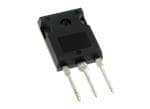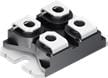

IXFN210N30P3

IXYS
747-IXFN210N30P3
IXFN210N30P3

Herst.:

Beschreibung:
MOSFET-Module N-Channel: Power MOSFET w/Fast Diode

ECAD Model:
Den kostenlosen Library Loader herunterladen, um diese Datei für Ihr ECAD Tool zu konvertieren. Weitere Infos zu ECAD-Modell.

Auf Lager: 680

Lagerbestand:
680 sofort lieferbar
Lieferzeit ab Hersteller:
26 Wochen Geschätzte Produktionszeit des Werks für Mengen, die größer als angezeigt sind.
Minimum: 1   Vielfache: 1
Stückpreis:
€ -,--
Erw. Preis:
€ -,--
Vorauss. Zolltarif:

Preis (EUR)

Menge Stückpreis
Erw. Preis
€ 39,49 € 39,49
€ 33,36 € 333,60

Produktattribut Attributwert Attribut auswählen
IXYS
Produktkategorie: MOSFET-Module
RoHS:  
Si
Screw Mount
SOT-227-4
N-Channel
1 Channel
300 V
192 A
14.5 mOhms
- 20 V, + 20 V
- 55 C
+ 150 C
1.5 kW
IXFN210N30
Tube
Marke: IXYS
Konfiguration: Single
Abfallzeit: 13 ns
Produkt-Typ: MOSFET Modules
Anstiegszeit: 25 ns
Verpackung ab Werk: 10
Unterkategorie: Discrete and Power Modules
Handelsname: HiPerFET
Typ: HiperFET
Regelabschaltverzögerungszeit: 94 ns
Typische Einschaltverzögerungszeit: 46 ns
Gewicht pro Stück: 30 g
Produkte gefunden:
Um ähnliche Produkte anzuzeigen, wählen Sie mindestens ein Kontrollkästchen aus
Um ähnliche Produkte in dieser Kategorie anzuzeigen, wählen Sie mindestens ein Kontrollkästchen oben aus.
Ausgewählte Attribute: 0

Für diese Funktionalität ist die Aktivierung von JavaScript erforderlich.

TARIC:
8541290000
CNHTS:
8541290000
CAHTS:
8541290000
USHTS:
8541290065
JPHTS:
854129000
KRHTS:
8541299000
MXHTS:
8541299900
ECCN:
EAR99

PolarP3™ HiPerFET™ Power MOSFETs

IXYS PolarP3™ HiPerFET™ Power MOSFETs are the latest addition to the benchmark high-performance Polar-Series for the product portfolio between 300V, 500V, and 600V. The high Figure of Merit (FOM), which is the multiplication of Qg and RDS(on), provides an excellent alternative to weaker super junction technologies. These PolarP3 HiPerFETs demonstrate up to a 12% reduction in on-state resistance (Rdson), a 14 percent reduction in gate charge (Qg) and as high as a 20 percent increase in maximum power dissipation (Pd). Lower thermal resistances are also achieved due to reduced chip thicknesses, increasing the total power density of the device.