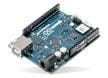

ABX00021

Arduino
782-ABX00021
ABX00021

Herst.:

Beschreibung:
WLAN Development Tools – 802.11 UNO WIFI Rev2

Auf Lager: 190

Lagerbestand:
190 sofort lieferbar
Minimum: 1   Vielfache: 1
Stückpreis:
€ -,--
Erw. Preis:
€ -,--
Vorauss. Zolltarif:

Preis (EUR)

Menge Stückpreis
Erw. Preis
€ 42,12 € 42,12

Produktattribut Attributwert Attribut auswählen
Arduino
Produktkategorie: WLAN Development Tools – 802.11
RoHS:  
Development Boards
Uno Wi-Fi
802.11 b/g/n
2.4 GHz
WiFi
Marke: Arduino
Produkt-Typ: WiFi Development Tools
Verpackung ab Werk: 25
Unterkategorie: Development Tools
Handelsname: UNO
Gewicht pro Stück: 204,120 g
Produkte gefunden:
Um ähnliche Produkte anzuzeigen, wählen Sie mindestens ein Kontrollkästchen aus
Um ähnliche Produkte in dieser Kategorie anzuzeigen, wählen Sie mindestens ein Kontrollkästchen oben aus.
Ausgewählte Attribute: 0

TARIC:
8473308000
CNHTS:
8543709990
CAHTS:
9023000000
USHTS:
9023000000
JPHTS:
902300000
MXHTS:
9023000100
BRHTS:
90230000
ECCN:
5A992.C

UNO WLAN REV2

Das Arduino Uno WLAN Rev2 ist ein Uno-Mikrocontroller-Board mit integriertem WLAN-Modul. Das Uno WLAN Rev2 basiert auf dem 8-Bit-Mikrocontroller ATmega4809 von Microchip Technology. WLAN 802.11b/g/n-Konnektivität wird durch ein integriertes u-blox-Modul NINA-W13 bereitgestellt. Das NINA-W13-Modul ist ein eigenständiges System-on-Chip (SoC) mit integriertem TCP/IP-Protokollstapel, das den Zugriff auf ein WLAN-Netzwerk ermöglicht. Das Bauelement kann auch als Zugangspunkt dienen. Das Uno WLAN Rev2 unterstützt auch die OTA-Programmierung (Over-the-Air), entweder für die Übertragung von Arduino Sketches oder WLAN-Firmware.

Uno Boards

Arduino Uno Boards are open-source microcontroller boards designed for simplicity, ease of use, and versatility in various electronic projects. As part of the open-source Arduino platform, the boards are equipped with 14 digital input/output pins, six analog inputs, a USB connection for programming, and a power jack for an external power supply. The Arduino Uno Boards operate at a clock speed of 16MHz, making it suitable for handling various sensors, motors, LEDs, and communication modules. The Arduino Uno supports digital and analog interfacing, enabling applications ranging from basic LED blinking to complex robotics and Internet of Things (IoT) systems. Its simplicity and broad community support make it a favored choice among hobbyists, educators, and professionals for prototyping and developing embedded systems, interactive devices, automation solutions, and more.